
Pneumatic
vibrators.
Four drive principles. One job: move material with compressed air, anywhere electricity isn't welcome. Oil-free, ATEX-compliant variants available for zone 22 dust and zone 1 gas.
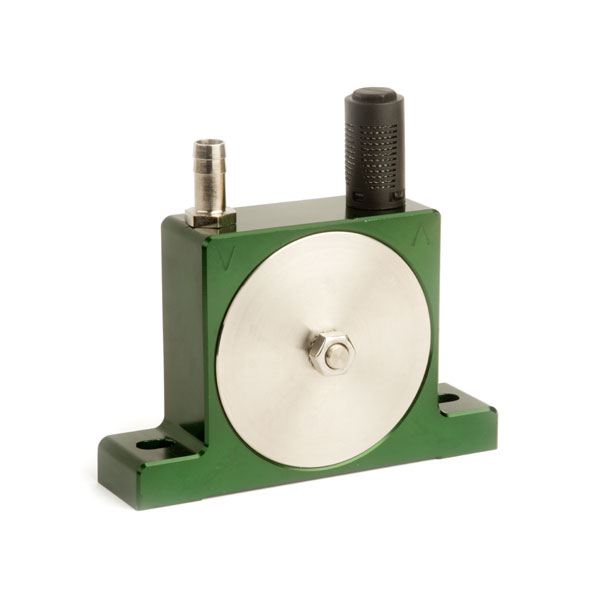
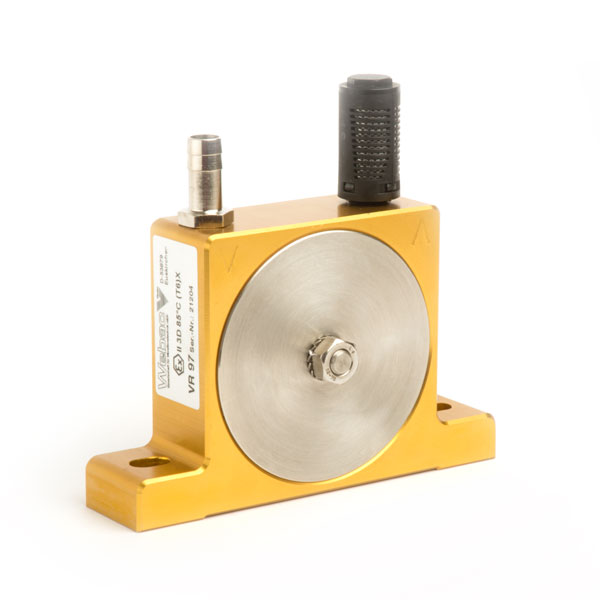
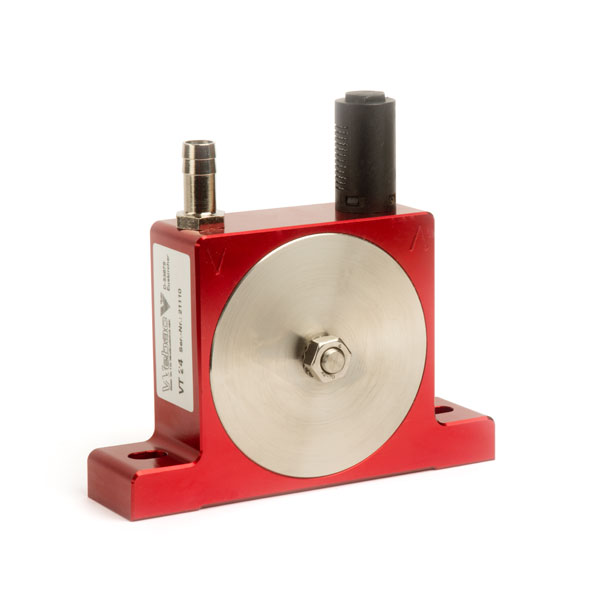
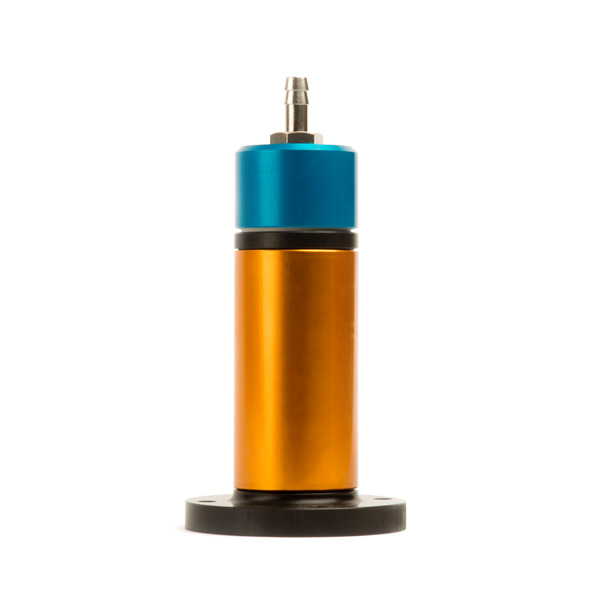
Pick the physics
that match the material.
Ball vibrator
A hardened steel ball circulates inside a raceway, driven by a tangential air jet. Produces circular vibration.
- Force
- 180 N to 4 200 N
- Frequency
- 140 Hz to 600 Hz
- Typical use
- Silo discharge, hopper loosening, fine powder conveying.
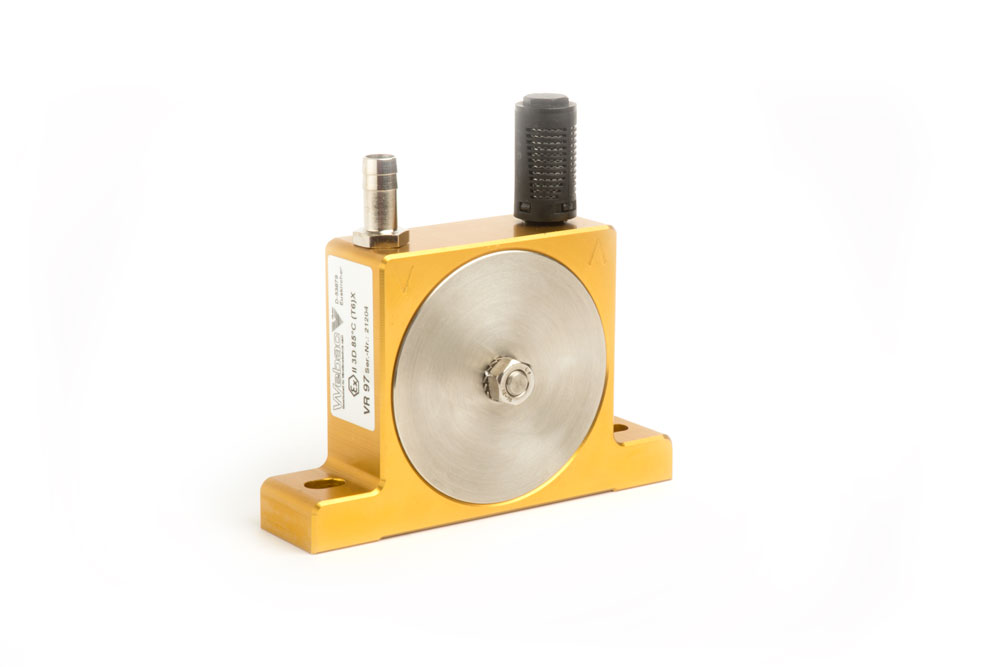
Roller vibrator
A cylindrical roller runs on an annular track under air pressure, generating high centrifugal force at low frequency.
- Force
- 600 N to 12 000 N
- Frequency
- 40 Hz to 200 Hz
- Typical use
- Heavy bulk goods, coarse material, concrete compaction, formwork.
Turbine vibrator
A counterweighted turbine wheel driven by compressed air. Oil-free, low-noise, very high frequency.
- Force
- 300 N to 9 500 N
- Frequency
- 100 Hz to 500 Hz
- Typical use
- Hygienic applications, pharma, food, washdown environments.
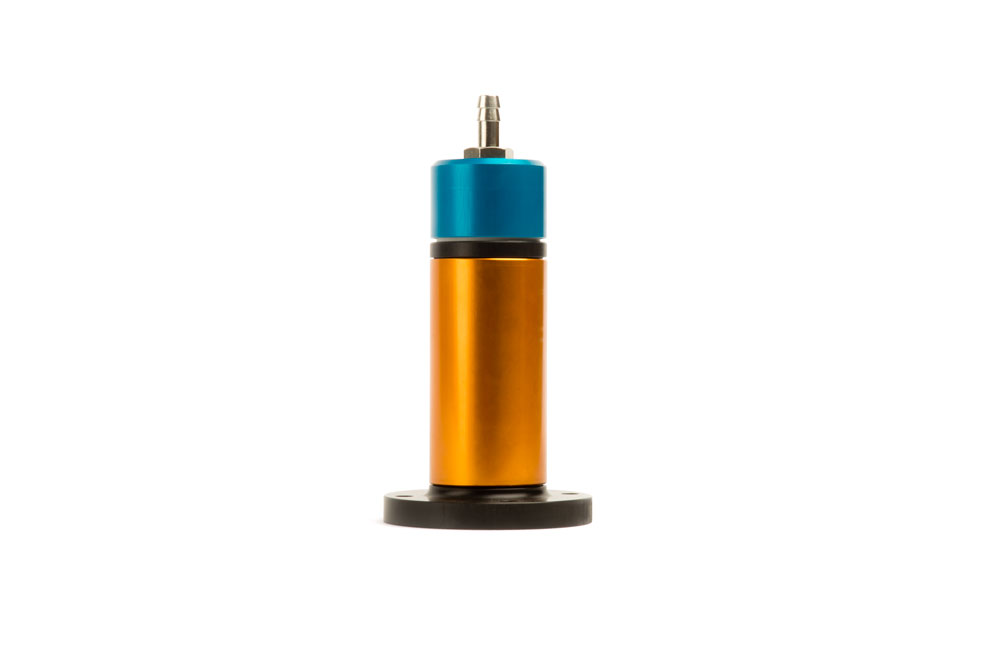
Piston vibrator
A reciprocating piston impacts an end stop, producing linear vibration with pronounced striking force.
- Force
- 400 N to 18 000 N
- Frequency
- 8 Hz to 80 Hz
- Typical use
- Stubborn bulk solids, tar and bitumen, release of caked product, foundry shakeout.
One sheet.
Every variant.
All four drive types share the same connection standards, lubrication options and certifications. Specify once, swap freely.
- Drive
- Compressed air, 2 to 6 bar
- Consumption
- From 0.1 to 9 m³/min
- Temperature
- -20 °C to +120 °C standard
- Housing
- Aluminium, steel or stainless
- Connection
- G1/4 to G1 BSP
- Lubrication
- Oil-free variants available
- ATEX
- II 2D / II 2G on request
- Noise
- From 72 dB(A)
Full selection tables and dimensional drawings available on request.